 Reviews



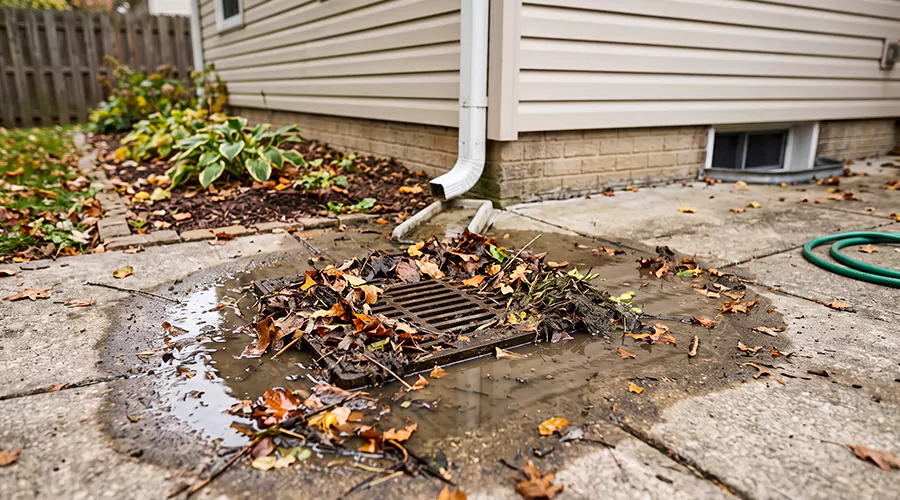
A blocked outside drain is commonly caused by leaves, mud, sediment, tree roots or debris collecting inside underground drainage pipes. Rainwater that cannot enter or pass through the drain may collect around the property. Identifying whether the obstruction is at the surface or deeper inside the system helps determine the appropriate solution, while storm drain cleaning can help remove built-up debris and restore proper drainage.
Outdoor drainage systems are particularly vulnerable during heavy rainfall because moving water carries loose soil, leaves and other debris toward drain openings. A restriction that develops gradually may become noticeable only when a storm produces more runoff than the drain can handle. Understanding the causes of a blocked drain outside your property can help prevent flooding and identify conditions that require professional attention.
What Are the Most Common Causes of a Blocked Outside Drain?
Outside drains collect rainwater, surface runoff and, in some systems, wastewater. Their design and purpose affect the type of material that can cause a blockage. Surface water drains commonly collect leaves and sediment, while wastewater drains can develop restrictions caused by grease or unsuitable flushed materials.
Common causes include:
- Fallen leaves: Leaves can cover outdoor drain grates and prevent rainwater from entering.
- Mud and sediment: Soil washed into the drainage system can settle inside catch basins and underground pipes.
- Grass clippings: Lawn maintenance debris can accumulate around surface drain openings.
- Tree roots: Roots can enter damaged underground pipes and interfere with water movement.
- Foreign objects: Litter, construction debris and small objects can lodge inside drainage components.
- Damaged piping: Crushed or displaced underground sections can restrict drainage and collect additional debris.
- Blocked outlets: An underground pipe may be clear near its inlet but unable to discharge water because its outlet is obstructed.
These causes are consistent with guidance covering residential outdoor drainage systems and stormwater management.
How Can You Identify Which Outside Drain Is Blocked?
Identifying the drainage system is important because not every outdoor drain carries the same type of water. A surface drain that collects rainfall requires a different response from an outdoor wastewater gully connected to household plumbing.
The following comparison explains the main differences.
| Drain Type | Primary Purpose | Common Blockage |
|---|---|---|
| Surface drain | Collects rainwater from paved areas | Leaves and sediment |
| Yard drain | Removes standing water from landscaping | Mud, roots and debris |
| Catch basin | Collects runoff and traps sediment | Accumulated silt |
| Downspout drain | Carries roof runoff away from the building | Leaves and roof debris |
| Outdoor wastewater gully | Receives household wastewater | Grease and solid waste |
| Underground drainage pipe | Transports collected water | Sediment, roots or structural damage |
A stormwater drain should not be treated as a household wastewater drain. In many areas, public stormwater systems discharge into local waterways. Avoid introducing household chemicals, cooking grease or wastewater into stormwater drains.
Why Does an Outside Drain Become Blocked After Heavy Rain?
Heavy rain can move loose material across driveways, patios and landscaped areas. Leaves and soil are carried toward drainage openings, where they collect against grates or settle inside catch basins.
A drain may function normally during light rainfall but struggle when a storm delivers water rapidly.
Several conditions can contribute:
- Large quantities of leaves entering the drainage area.
- Sediment washing from exposed soil or garden beds.
- Debris accumulating inside a catch basin.
- An existing underground restriction becoming overwhelmed.
- An outlet that cannot release water quickly enough.
- Stormwater volume exceeding the system's designed capacity.
The distinction between blockage and insufficient drainage capacity is important. Seattle Public Utilities identifies both clogged storm drains and inadequate drainage-system capacity as causes of urban flooding. A drain that is physically clear may still overflow during exceptionally heavy rainfall.
What Are the Warning Signs of a Blocked Outside Drain?
An outdoor drainage problem often becomes visible before the system stops working completely. Water may begin collecting around the opening or remain on paved surfaces longer than usual.
Watch for these warning signs:
- Water collects around the drain grate during ordinary rainfall.
- Standing water remains long after the rain has stopped.
- Leaves and debris repeatedly accumulate around the opening.
- Water overflows from an outdoor drainage gully.
- Rainwater moves toward the building instead of draining away.
- The ground remains unusually wet along the underground drainage route.
- An unpleasant sewage odor appears near a wastewater drain.
- Multiple outdoor drainage openings overflow together.
- Water emerges from another connected drainage point.
- Previously effective drainage becomes noticeably slower.
The timing is useful. A problem that appears only during unusually heavy storms may involve drainage capacity, while standing water after moderate rainfall suggests a possible restriction.
Can Tree Roots Block an Outside Drain?
Tree roots can contribute to outdoor drainage problems when they enter underground pipes through cracks or defective joints. Once inside, roots can grow and trap additional debris. The resulting restriction may become more severe over time. Root intrusion is particularly relevant when a previously functional underground drain repeatedly becomes blocked despite surface cleaning. Possible indicators include recurring drainage problems and restrictions that cannot be reached through the inlet or catch basin. However, these symptoms do not establish that roots are present. Sediment accumulation and structural damage can produce similar results. A drainage inspection may be needed to identify the actual cause.
How Can You Check an Outside Drain Safely?
The first inspection should focus on accessible surface areas rather than hidden underground piping.
For a private yard drain, examine the grate, surrounding ground and any accessible outlet. Avoid lifting heavy covers or entering drainage structures.
Follow these steps:
- Identify the drain: Determine whether it receives rainwater or household wastewater.
- Inspect the surrounding area: Look for accumulated leaves, soil and litter.
- Remove loose surface debris: Use a rake, brush or suitable tool.
- Examine the visible inlet: Check whether material remains beneath an accessible cover.
- Locate the outlet if possible: Look for obvious obstructions without entering confined spaces.
- Observe water movement: Test only when the system is not already flooded and the outlet can discharge safely.
- Stop if drainage remains restricted: A deeper obstruction may require specialist equipment.
For public storm drains, clear surface debris only when it is safe. Do not lift public storm drain grates. Clackamas County's September 2026 guidance specifically recommends removing surface leaves and debris without removing the grate.
Can You Clear a Blocked Outside Drain Yourself?
A simple surface obstruction can sometimes be removed without specialist equipment. For example, leaves covering a grate can be collected with a rake and disposed of appropriately. A private catch basin with a removable maintenance cover may also contain accessible sediment. Follow the manufacturer's maintenance instructions and avoid handling unknown wastewater. However, deeper blockages are different. Do not attempt to clear an underground pipe by forcing a rigid object into it. Excessive pressure or unsuitable equipment can damage connections. Public drainage systems, deep access chambers and drains containing sewage should not be approached as ordinary DIY cleaning projects.
How Much Does Outside Drain Repair Cost in 2026?
The cost depends on whether the problem involves surface cleaning, underground blockage removal or replacement of damaged drainage components.
General drain-cleaning prices offer a starting point, but they do not establish the cost of every outdoor drainage project.
| Type of Work | 2026 U.S. Cost Reference |
|---|---|
| Removing accessible surface debris | Usually a DIY maintenance task |
| General professional drain cleaning | 147–352 |
| Main sewer clog repair | Approximately $380 on average |
| Installing a new yard drainage system | 2,146–7,173 on average |
These figures describe different types of work and should not be treated as interchangeable quotations. Outdoor excavation, specialized cleaning and damaged-pipe replacement can change the total substantially.
When Should You Call a Professional?
Professional drainage investigation becomes appropriate when removing surface debris does not restore normal flow or the system repeatedly floods.
Seek additional assistance when:
- Rainwater repeatedly accumulates near the building's foundation.
- An underground obstruction cannot be reached safely.
- Sewage is overflowing from an outdoor wastewater drain.
- Multiple drainage points are affected.
- Tree-root intrusion or damaged piping is suspected.
- Water remains despite clearing the inlet and accessible outlet.
- A public drain creates a flooding hazard.
Report problems involving public stormwater infrastructure to the responsible local authority. Do not attempt to remove public drainage covers or work in moving floodwater.
How Can You Prevent Another Outside Drain Blockage?
Outdoor drainage systems benefit from regular inspection, particularly before and during seasons associated with heavy rainfall.
A practical maintenance routine includes:
- After gardening: Collect grass clippings and loose soil before they reach drainage openings.
- During leaf fall: Remove accumulated leaves from surface grates.
- Before heavy rainfall: Check accessible inlets and outlets.
- After storms: Inspect areas where standing water previously developed.
- During routine landscaping: Keep mulch and soil away from drainage openings.
- Drainage slows repeatedly: Investigate the underground system instead of relying solely on surface cleaning.
Never sweep or blow collected leaves into a street drain. Public stormwater authorities recommend clearing accessible surface debris before rainfall whenever possible.
Conclusion
A blocked outside drain is commonly caused by leaves, sediment or debris collecting around the inlet or inside underground piping. Tree roots and structural damage can create more persistent restrictions. Begin by identifying the type of drainage system and inspecting accessible surface areas. Remove loose debris when it is safe, but avoid opening public storm drains or entering drainage structures. If flooding continues after accessible areas are clear, the cause may require professional investigation.
Frequently Asked Questions
Can leaves completely block an outside drain?
Yes. Large amounts of wet leaves can cover a drainage grate and prevent rainwater from entering.
Why does my outside drain overflow only during heavy rain?
The system may have a partial blockage or insufficient capacity to handle the amount of runoff.
Can tree roots grow inside drainage pipes?
Yes. Roots can enter through existing cracks or defective underground pipe connections.
Should I pour drain cleaner into an outside drain?
Do not introduce chemical drain cleaner into stormwater systems. The correct approach depends on the drain type and obstruction.
Can a clear drain grate still have an underground blockage?
Yes. Sediment, roots or a blocked outlet can restrict water even when the visible inlet is clean.